
The Perfect Fall Service: Chemical Peels
By October, the tan is gone and what's left behind is easier to see. There's a scatter of brown spots across the cheekbones, a shadow along the upper lip, and texture that makeup sits on instead of in. Most of it started in June, and fall is the season to fade it.
Why Summer's Spots Stay Put
Hyperpigmentation is extra melanin collecting in one area. Sun spots, melasma, and the flat marks left behind after a breakout all fall under that umbrella, and summer makes every one of them darker.
A tan fades on its own. These usually don't, because the pigment sits deeper and the skin keeps getting signaled to make more of it. Melasma is its own case. It's tied to hormones as well as sun, so it responds to steady, gentle correction over time rather than one aggressive treatment.
Facials brighten the surface, and they have their place. Stubborn pigment needs two things a facial can't give it: resurfacing, and something that calms the pigment production underneath.
How the Perfect Peel Works
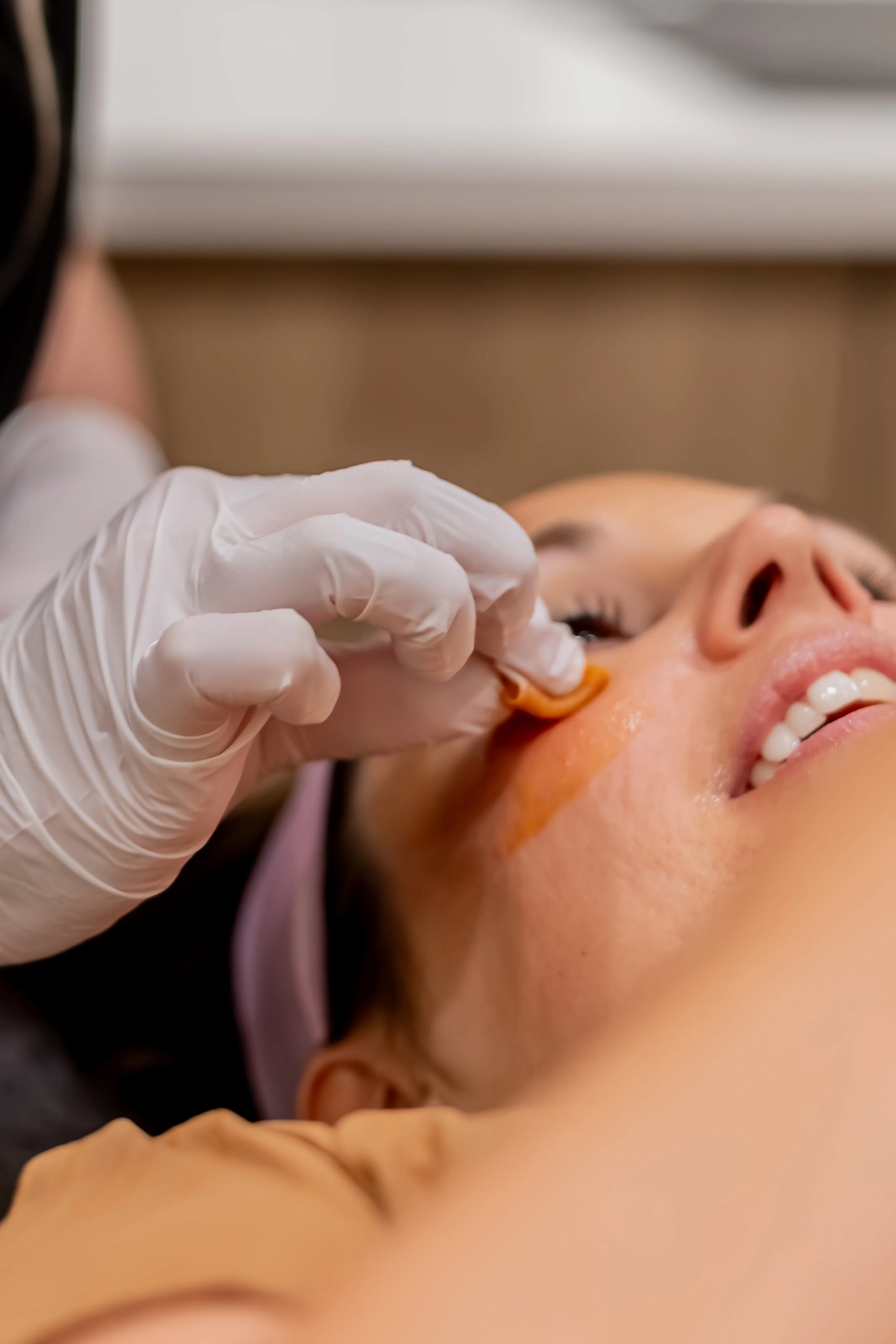
The Perfect Peel is a medium-depth peel that does both. It blends TCA, salicylic acid, retinoic acid, kojic acid, phenol, and vitamin C with glutathione. TCA and retinoic acid loosen the damaged outer layers so newer, more even skin comes through. Glutathione and kojic acid work on the pigment side by slowing the enzyme your skin uses to make melanin.
The peel goes on in layers, and Dayna watches your skin between each one. That control is the whole point. A medium-depth acid applied unevenly or left on too long can create new pigment instead of fading it, which is why this peel belongs in a treatment room and never in a bathroom mirror.
Expect your skin to feel tight for the first couple of days. Peeling usually starts around day three and wraps up by day seven, leaving brighter, smoother skin underneath.
Why Fall Is the Right Time
Healing skin is more sensitive to the sun, and sun on healing skin can trigger the exact pigment you're trying to fade. Shorter, cooler days make protecting it easy.
The Perfect Peel works best as a series of three, spaced about a month apart. Start in October, and your third peel lands in December, right before holiday photos. Plan each peel so days three through five land on a quiet stretch of your calendar.
Start With a Consultation
Every Perfect Peel series starts with a complimentary consultation. Dayna looks at your pigment, texture, skin history, and current products, then maps your three peels around your calendar so the peeling days land where they should. If the Perfect Peel isn't the right fit for your skin, she'll tell you what is.
Feel Giddie about the skin you’re in.
-Emily Giddings, RN
